
The Sustainable Libraries Initiative (SLI) includes member libraries across 27 states and partnerships with 10 state chapters of the American Library Association, including the Maine Library Association. Together, these libraries work toward sustainability goals that support their communities—everything from improving energy efficiency and reducing waste to expanding educational opportunities and sharing resources.
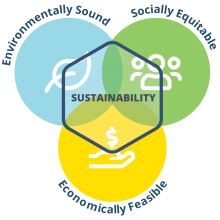
As part of this national effort, FCL is undertaking the Sustainable Library Certification Program (SLCP). This program offers a clear, guided framework for strengthening environmental stewardship, economic feasibility, and social equity. Libraries of all sizes can participate and most complete the certification within 1.5-2 years.
Why are we working toward this certification?
- It aligns with Goal #1 in Freeport’s new 10-year Comprehensive Plan: Environmental Stewardship.
- FCL supports the town’s goals by highlighting current sustainable practices and identifying new opportunities for improvement.
- The SLCP is flexible and supportive, adapting to libraries of all sizes. It does not require increased spending; instead, it provides guidance and ideas for making sustainable choices when selecting vendors or making changes to the facility and grounds.
How will we do it?
- The SLCP includes 13 flexible action item categories that libraries must complete. These categories offer suggested steps in areas such as indoor and outdoor spaces, resilience planning, purchasing and collection management, financial sustainability and other focus areas.
- FCL will submit responses and supporting materials for each completed action item. These will then be reviewed by an SLI committee for approval or feedback.
- The SLCP supports library progress by providing access to eco-friendly vendor lists. It also shares materials and ideas from other libraries that have completed certification.
- FCL will receive guidance through monthly check-in meetings with local mentor libraries. These mentor libraries have already completed the certification process.
What sustainability steps has FCL taken since joining?
- Conducted a trash audit – January, 2026: over a three-day period, staff collected and analyzed all trash and recycling generated in the building. The audit identified several actionable opportunities to further reduce landfill waste and improve our sustainability practices going forward.
- Installed a new filtered water fountain with bottle-refilling capabilities – January, 2026: helping reduce the number of single-use bottles that would otherwise enter the waste stream and providing access to filtered drinking water, for whoever needs it.
- Switched to sustainable receipt paper – December, 2025: we print a lot of receipts. Most receipt paper is not recyclable. We now use responsibly sourced receipt paper that is BPA and BPS-free, making it 100% recyclable. The vendor partners with an organization that plants two trees for every case of receipt paper they sell.
- LED lighting conversion – Summer, 2025: we replaced our halogen and fluorescent bulbs with energy-efficient LED light bulbs.
What sustainability steps did FCL take before joining?
- Launched the Electric Tool Lending Library program in 2025, providing electric lawn mowers, leaf blowers, hedge trimmers and weed whackers for Freeport residents to borrow.
- Started our Library of Things in 2023, giving the community access to electricity and air quality monitors, clothes mending kits, screenless audiobook players, video game consoles, a lobster pot and more.
- Became a registered Monarch Waystation site in 2023, supporting the preservation of Monarch butterflies and their migration.
- Installed a 10.1 kilowatt PV solar electricity system in 2010, consisting of (44) 230 watt Canadian Solar solar modules and (2) Sunny Boy 5000US solar grid tied inverters, which is capable of producing over 12,000 kilowatt hours of clean electricity per year to power the library.
- Maintained a long-standing commitment to purchasing recyclable materials whenever possible; a recent trash audit verified that 87% of our waste was properly sorted.
- Found creative ways to reuse incoming materials, particularly through Youth Services projects that reuse packing products, workroom scraps and single-use items to create amazing art, decorations and items for their programs. Interlibrary Loan packing practices also reuse padded bubble mailers and shipping label cards, keeping FCL’s loanable materials protected from damage and reducing landfill waste.
- Offered sustainability-focused programming, including yearly Craft Supply Swaps, Neighborhood Forest tree giveaways, quarterly Vermicomposting for Beginners workshops and monthly Darn It! Mending Drop-Ins. Other programs have led by example such as Scraptastic Art, where kids were provided with materials diverted from the waste stream to create unique works of art.
- Provided bike racks and crosswalks that support walkability and bike access.